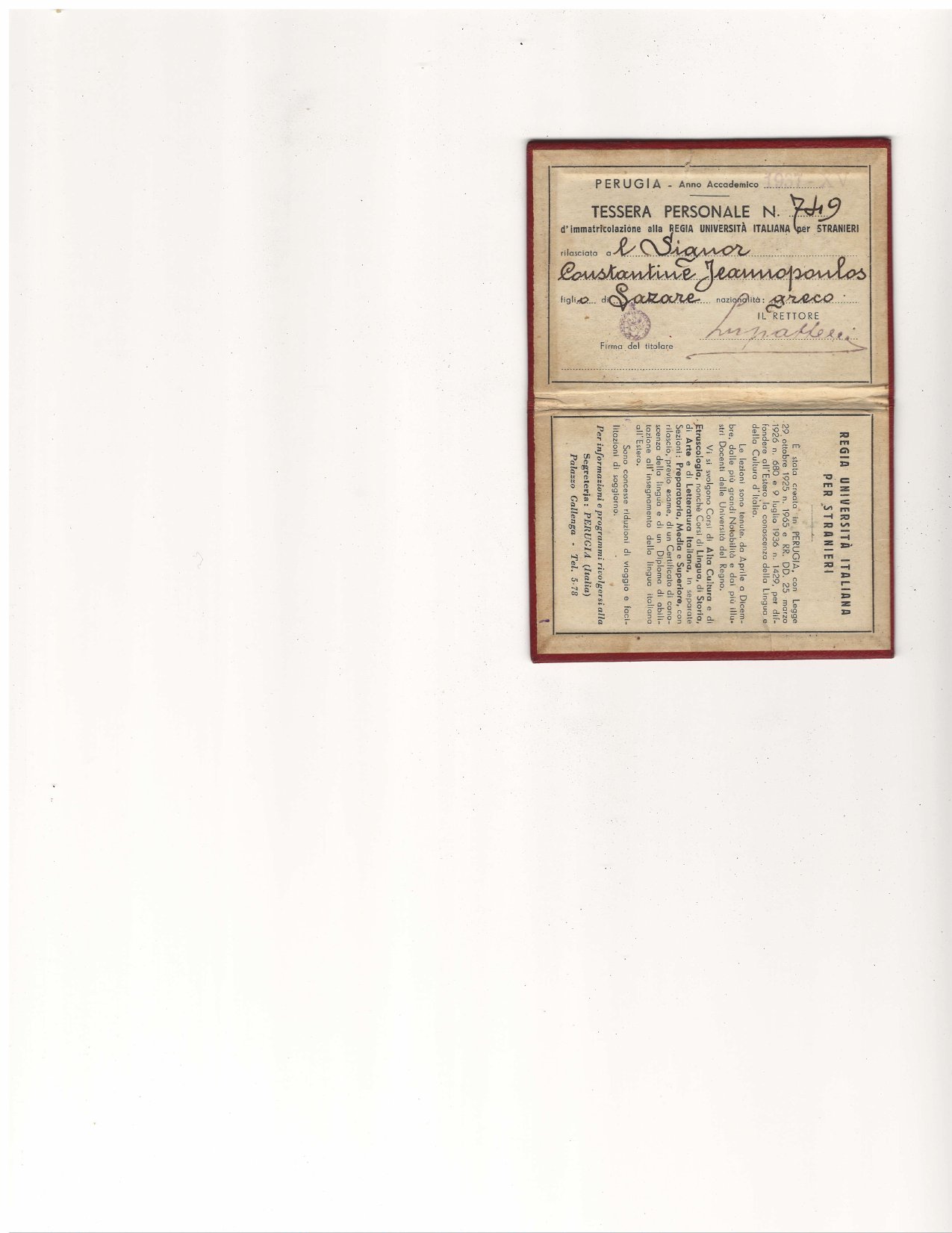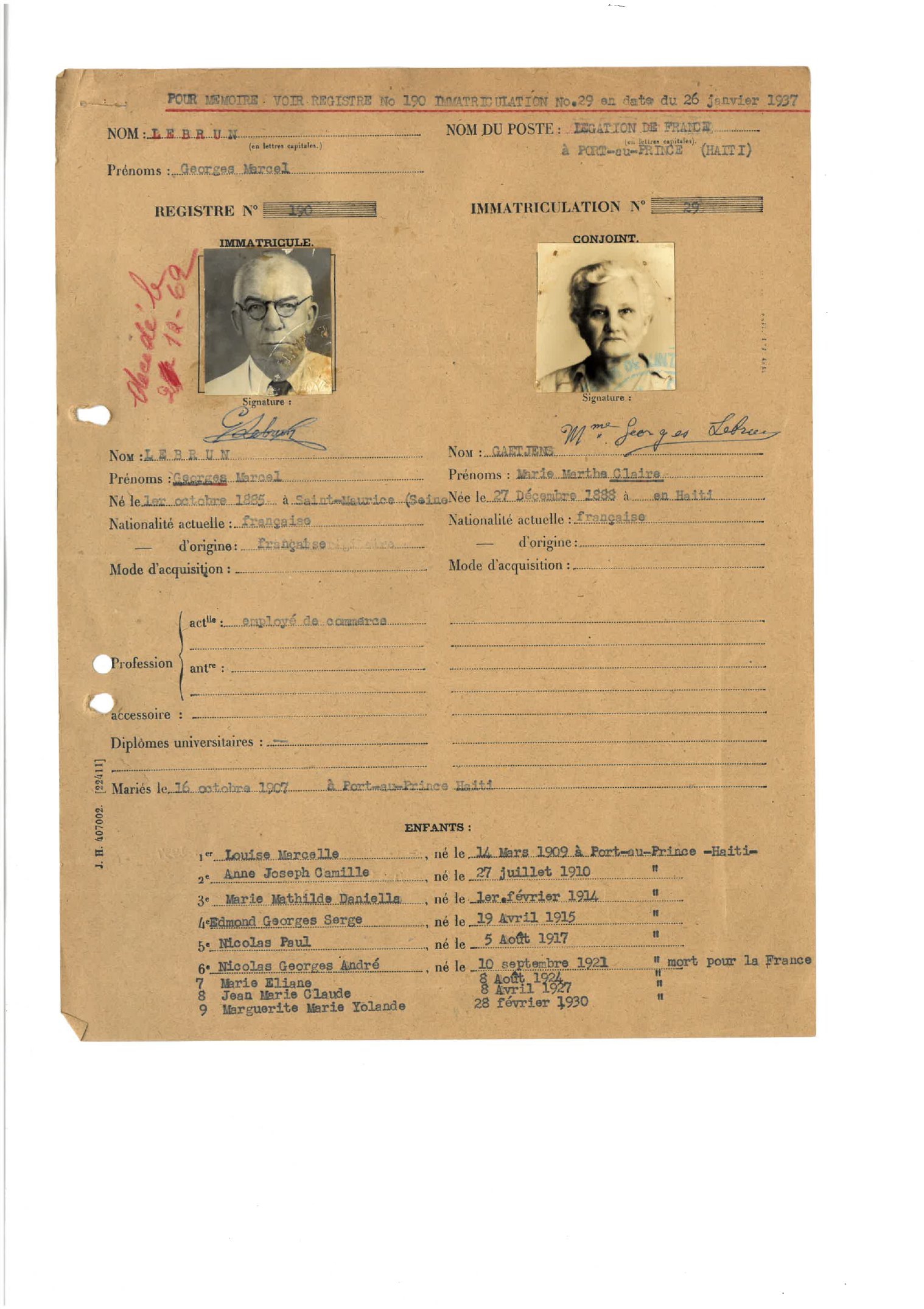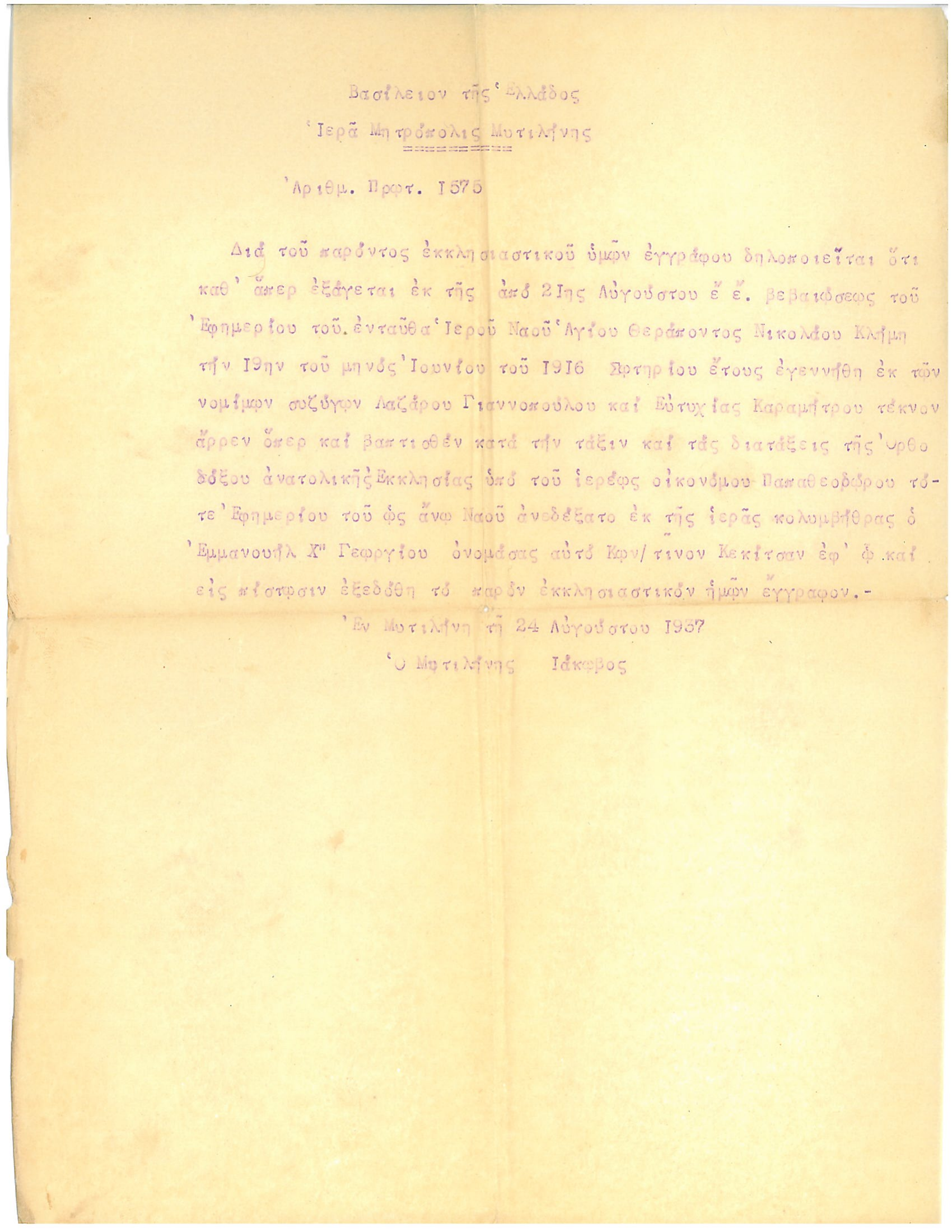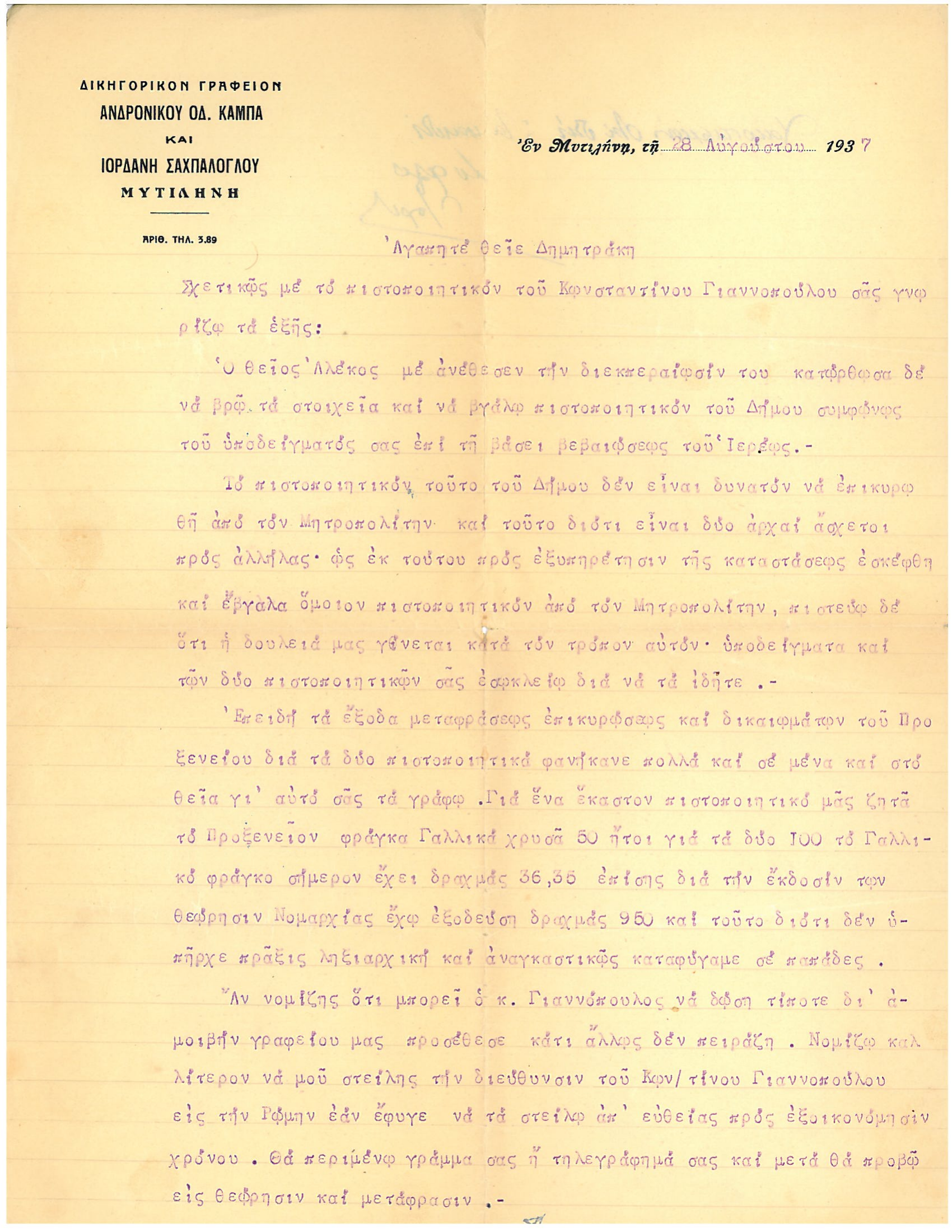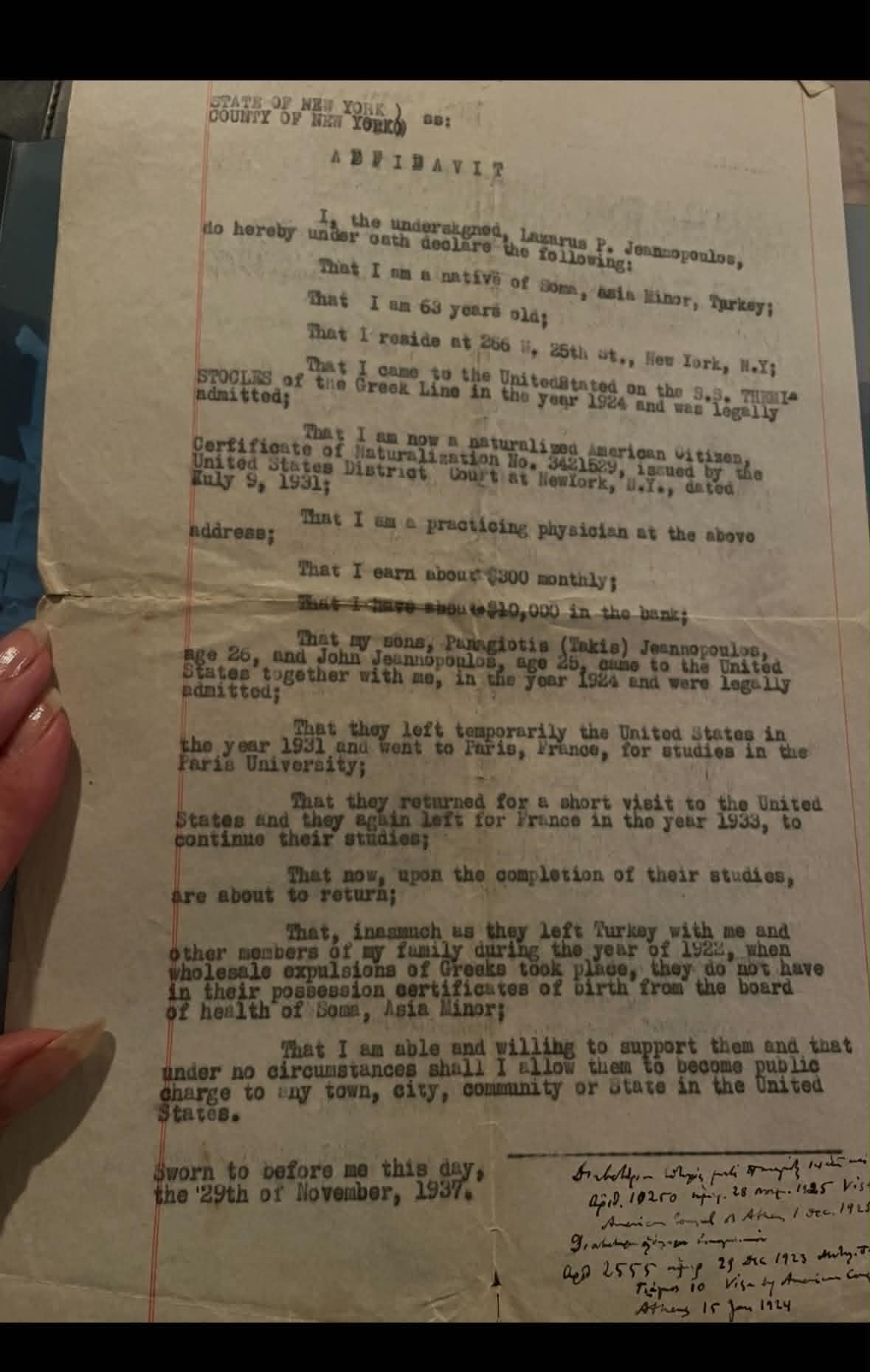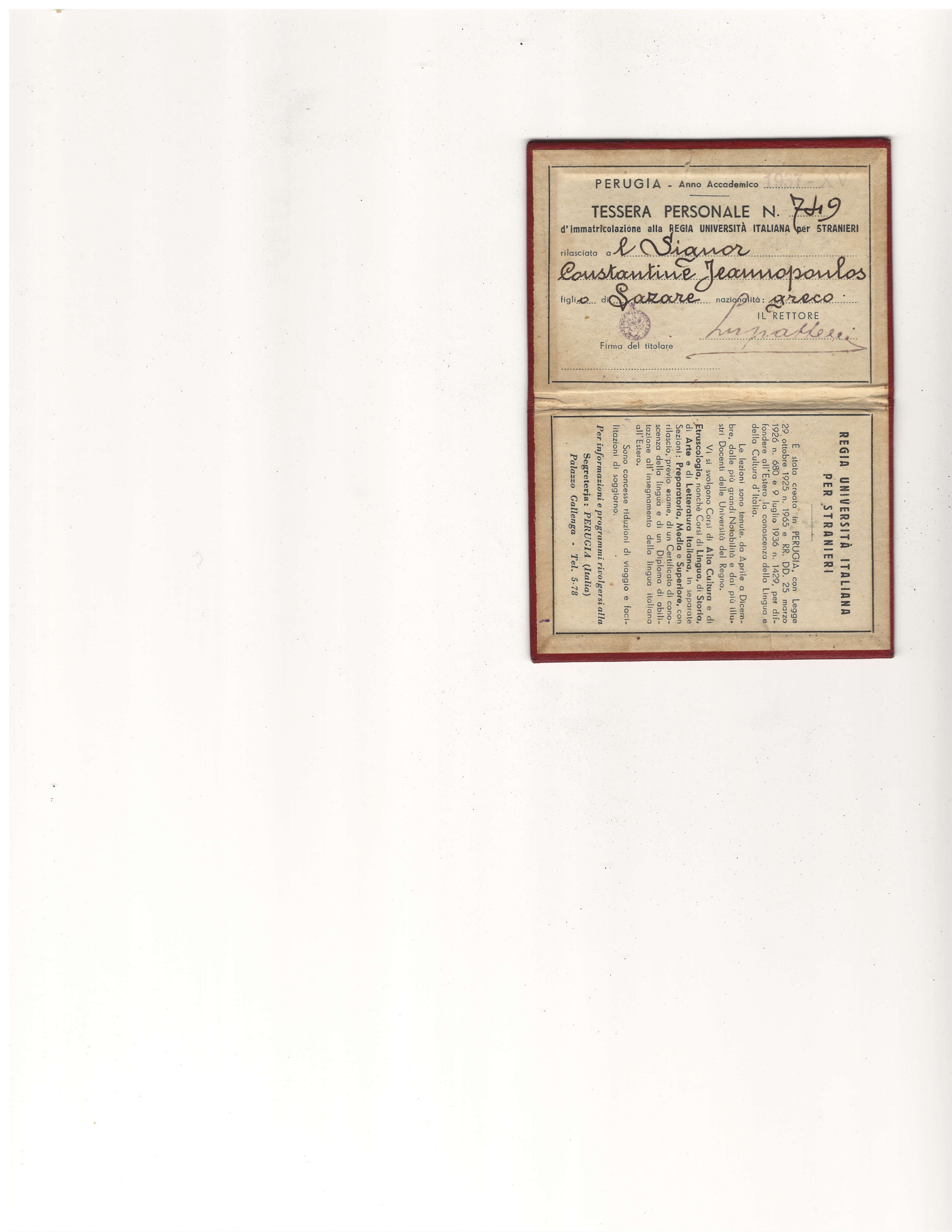
The smallest document in Constantine’s archive carrying the biggest weight for the Greek-citizenship case. Tessera Personale No. 749 — Constantine’s personal ID card from the Regia Università Italiana per Stranieri (Royal Italian University for Foreigners) in Perugia — issued for the 1937 academic year. The card carries his name in handwritten ink, his father’s name, and a single short line that, on its own, is one of the most consequential lines in the family record:
rilasciato a il Signor Constantine Jeannopoulos, figlio di Lazare, nazionalità: greco.
(Issued to Mr. Constantine Jeannopoulos, son of Lazare, nationality: Greek.)
Why this short Italian sentence matters
This is the explicit declaration of Greek nationality on an Italian-state-issued credential, written in the Italian state’s own hand. Not a self-declaration by Constantine — a determination by the Italian university administration, on the basis of his documentary identity, that his nationality was greco.
For the Greek citizenship case, this matters at two levels:
- Italian-state corroboration that Constantine was a Greek national in 1937. Italian fascist-era universities required precise foreign-national documentation for enrollment; Constantine had to produce supporting papers showing Greek citizenship to be classified as such.
- Decoupling from US citizenship. Constantine had already been a US citizen for six years by this point (since 1931, derivative through Lazaros). But the Italian university classified him as Greek — not American — because his operative nationality for entry to Italy in 1937 was Greek. He traveled on Greek papers, not US papers. This is documentary evidence that he retained and used his Greek citizenship throughout his European period (1937-1941).
The Royal Italian University for Foreigners
The reverse of the card prints the institution’s charter — founded in Perugia by the laws of October 29, 1925 and the subsequent decrees of March 25, 1926 and July 9, 1938, for the purpose of teaching foreigners Italian language, history, art, and literature. Preparatory courses, intermediate level, and superior level were offered, with reductions on travel costs available to enrolled students.
Constantine’s Perugia year (1937) was likely the language-and-orientation year preceding his enrollment in the Università di Roma medical-school program, where the 1938 medical student ID places him in his third year of Medicina e Chirurgia by May 1938.