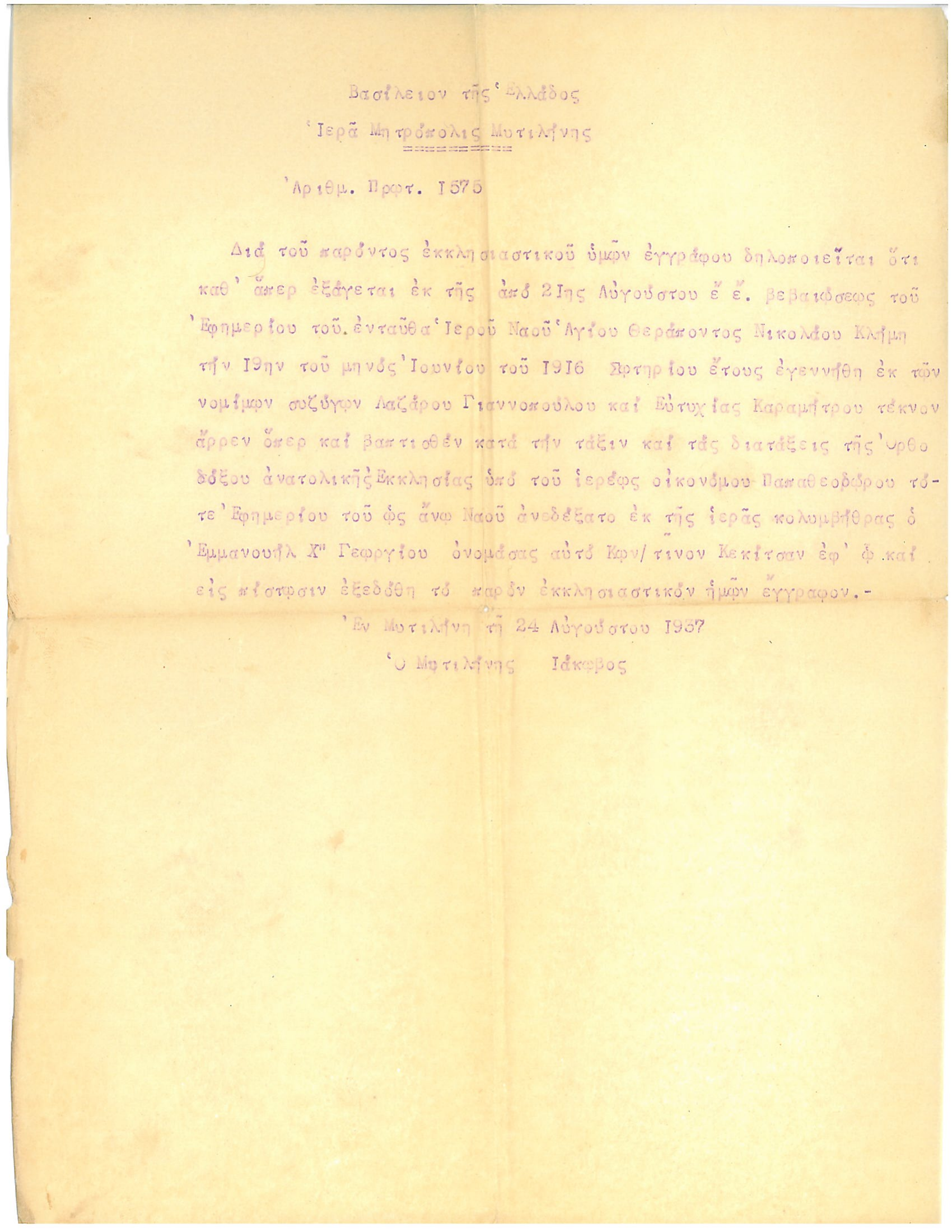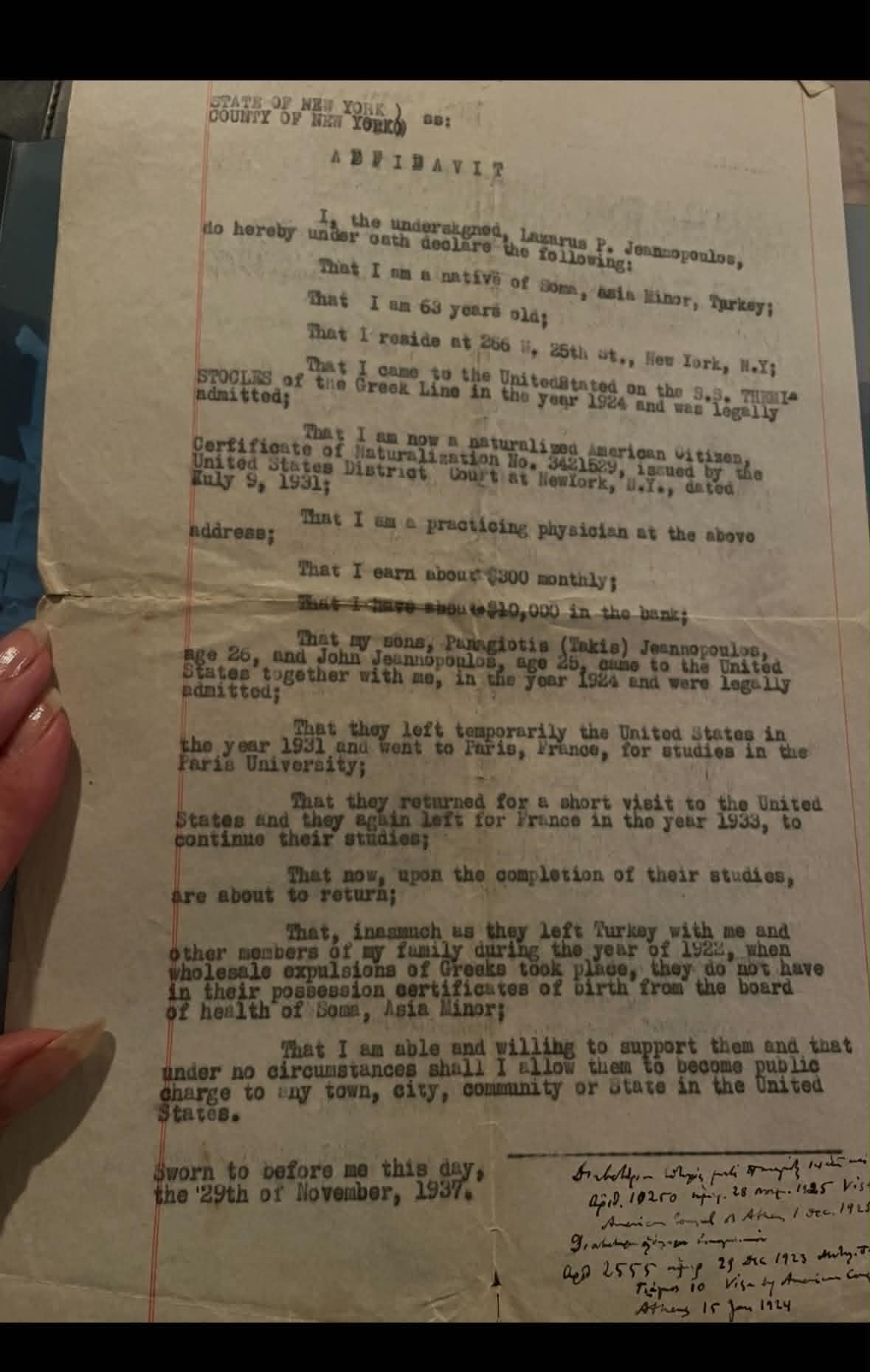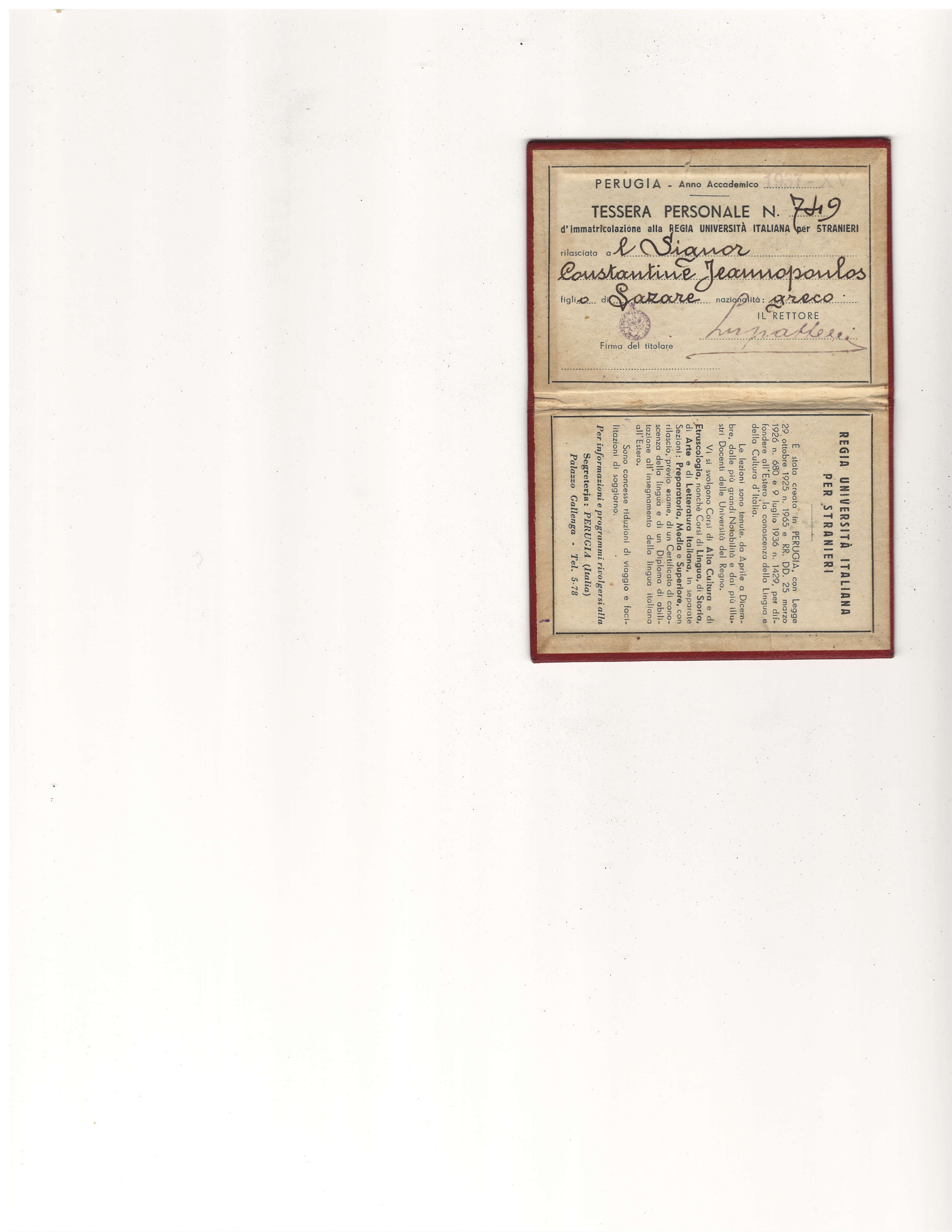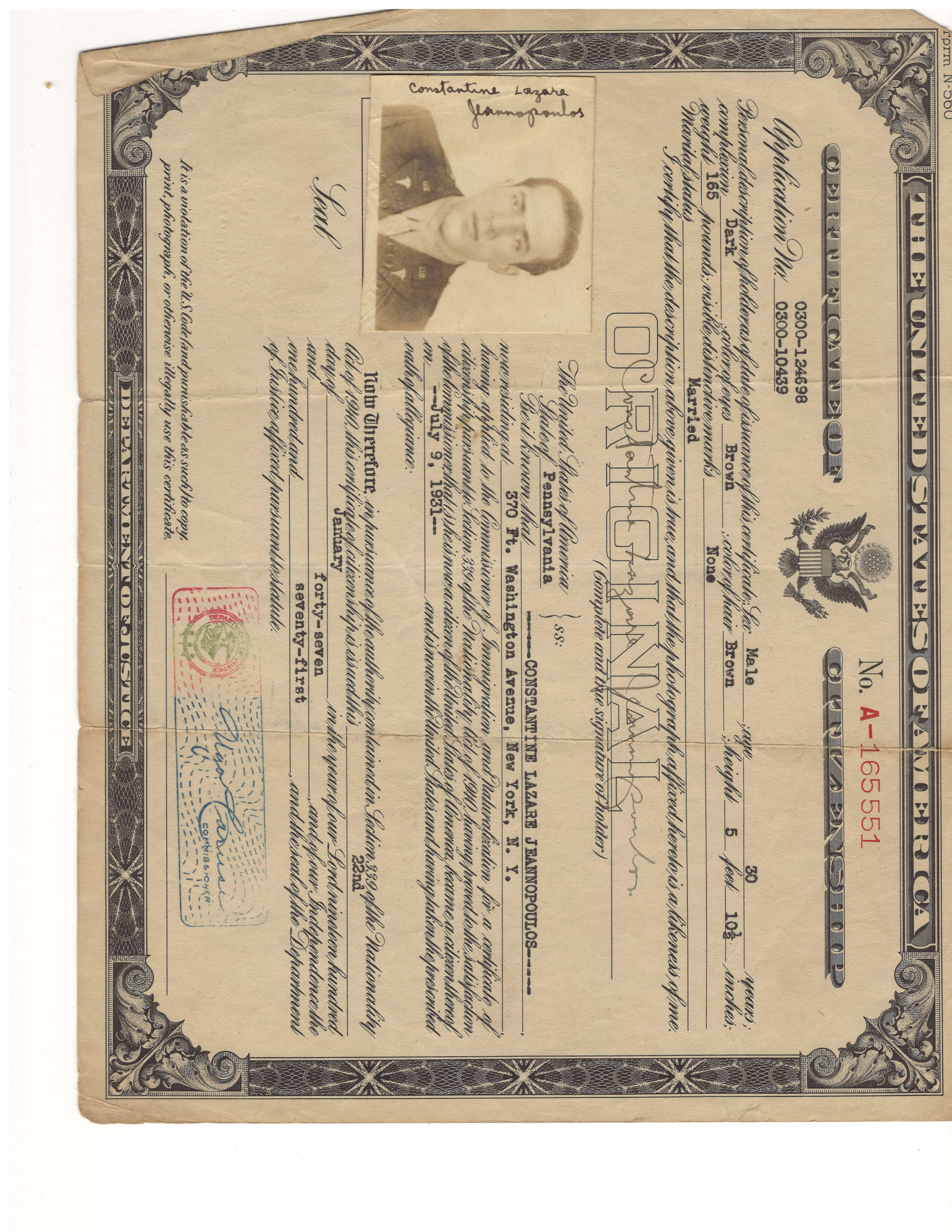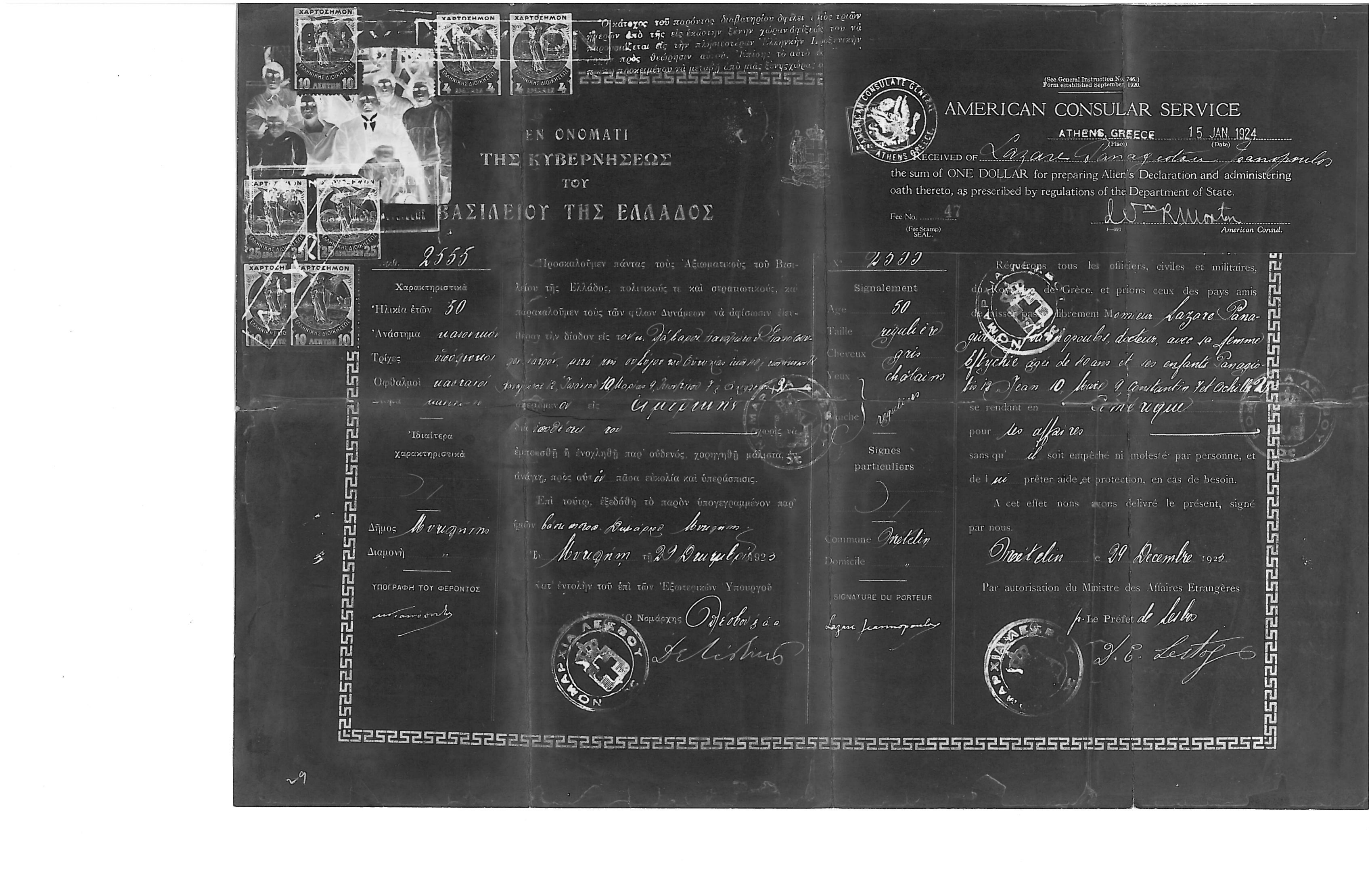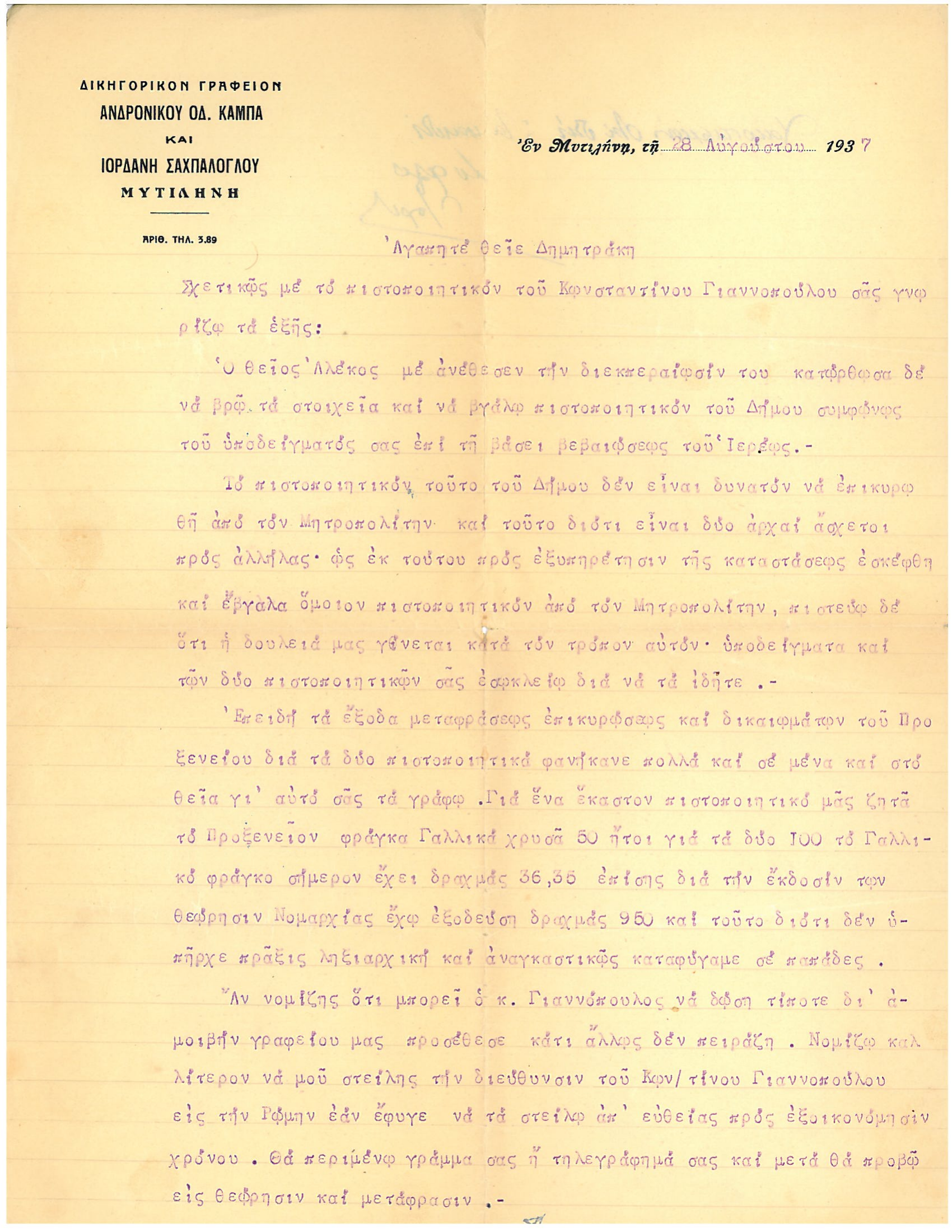
The administrative-paperwork backstory of Constantine’s Rome years. A letter from the Mytilene law office of Kambas & Sakhpaloglou (ΔΙΚΗΓΟΡΙΚΟΝ ΓΡΑΦΕΙΟΝ ΑΝΔΡΟΝΙΚΟΥ ΟΔ. ΚΑΜΠΑ ΚΑΙ ΙΟΡΔΑΝΗ ΣΑΧΠΑΛΟΓΛΟΥ), dated August 28, 1937, addressed to a Yannopoulos relative in Mytilene who was intermediating between the law firm and Lazaros in New York. The matter: obtaining fresh Greek certificates for Constantine Yannopoulos — then a medical student at the University of Rome — so he could complete his European credentials and his eventual US re-entry paperwork.
The letter is the operational backstory of the certificates that ended up in Constantine’s archive. The writer explains that he had to produce two parallel certificates because the Municipality of Mytilene and the Metropolitan of Mytilene “are two unrelated authorities” that could not validate each other’s documents. He then itemizes the costs: 50 French gold francs per certificate at the Consulate (100 francs for the pair, equivalent to about 3,666 drachmas), plus 950 drachmas for Nomarchy approval.
One sentence in the letter is the key historical clarification: “there was no civil-registry act and we necessarily resorted to priests.” Constantine’s birth in 1916 had never been civilly registered with the Ottoman or Greek state — only the Orthodox parish baptismal record existed. Every Greek-state Constantine document from 1923 forward traces back to that single 1923 priest’s affirmation, with each re-issuance introducing small clerical drifts in the date. This explains the long-standing discrepancy between his Greek-side birth dates (June 15 in the 1923 baptismal certificate, June 19 in the 1937 Metropolitan re-issue, propagated forward) and the June 21 date he used throughout his US life.
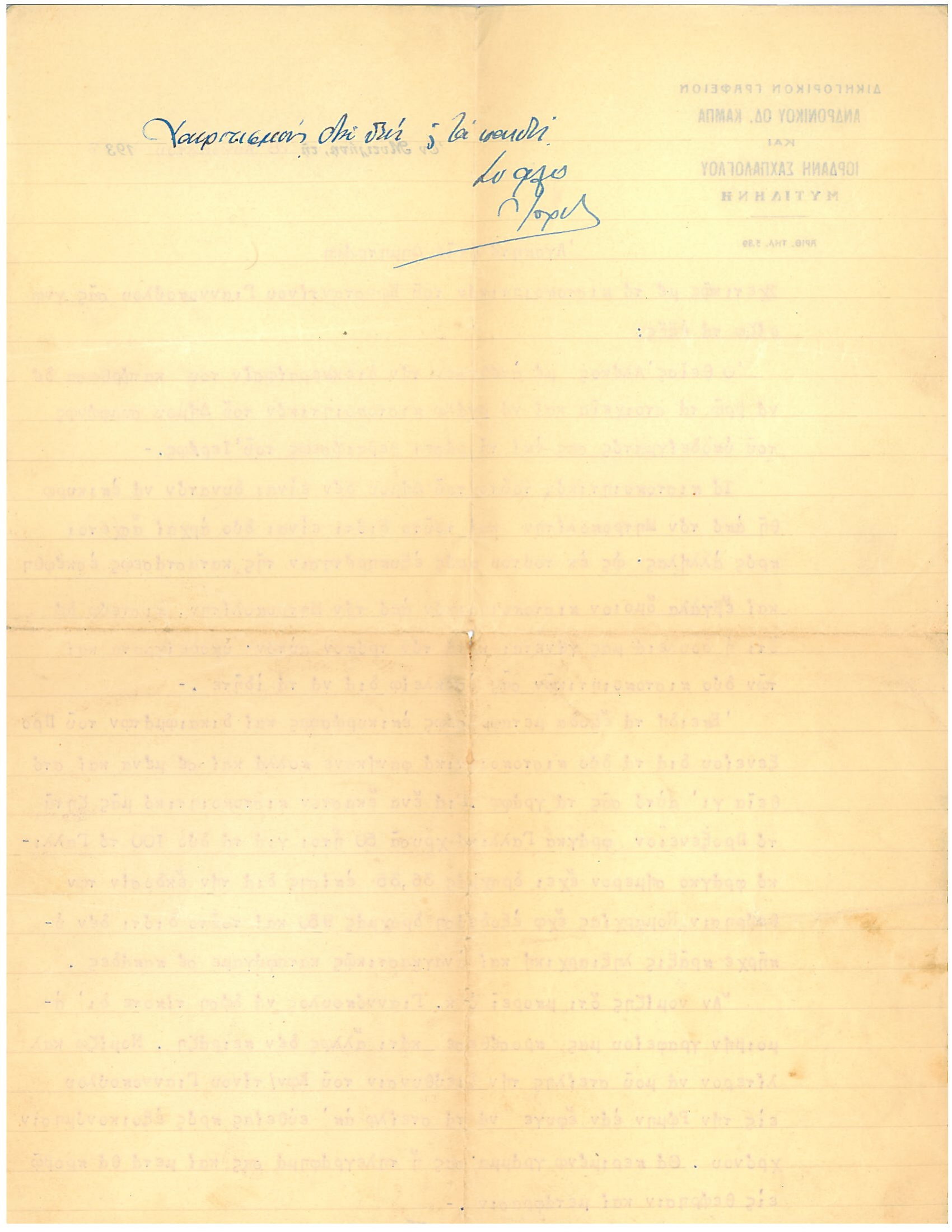
The back of the letter (page 2) carries the same letterhead and additional notations in a different hand.
The letter contemporaneously documents two previously-unknown Yannopoulos relatives, addressed by the writer as “Uncle Dimitrakis” (Θείος Δημητράκης, the letter’s recipient) and “Uncle Alekos” (Θείος Αλέκος, who had entrusted the matter to the law firm). Their relationship to Lazaros — brothers, in-laws, or more distant cousins — is still being researched.