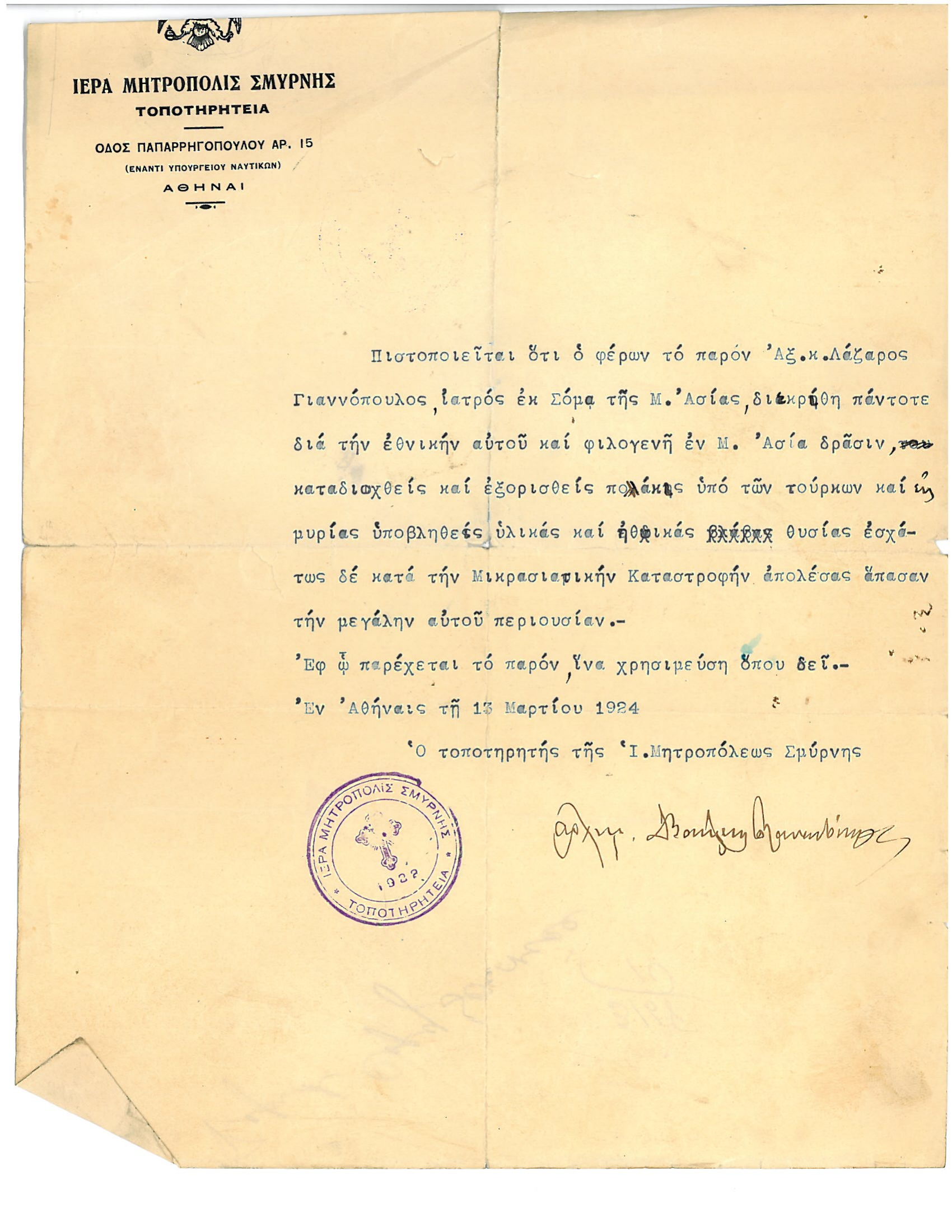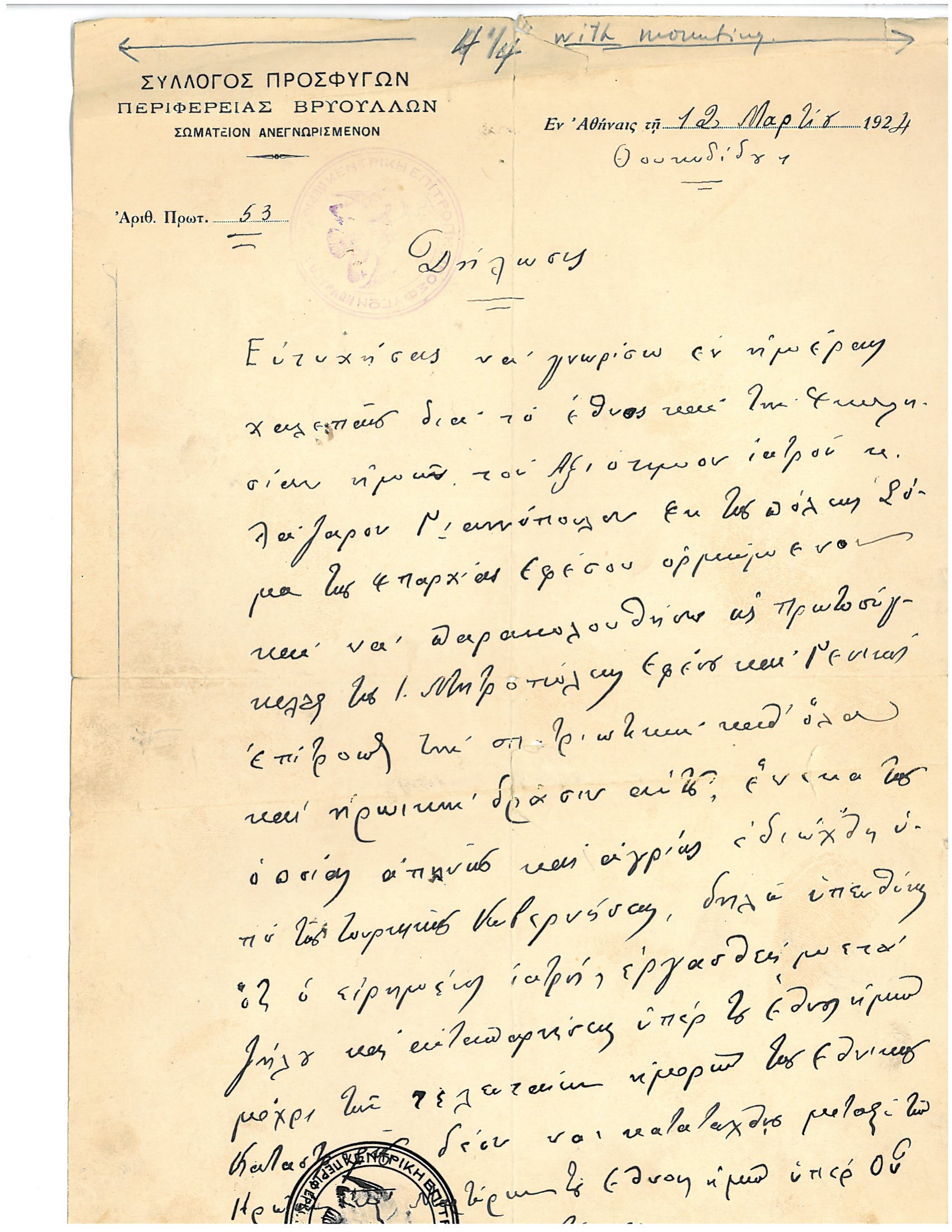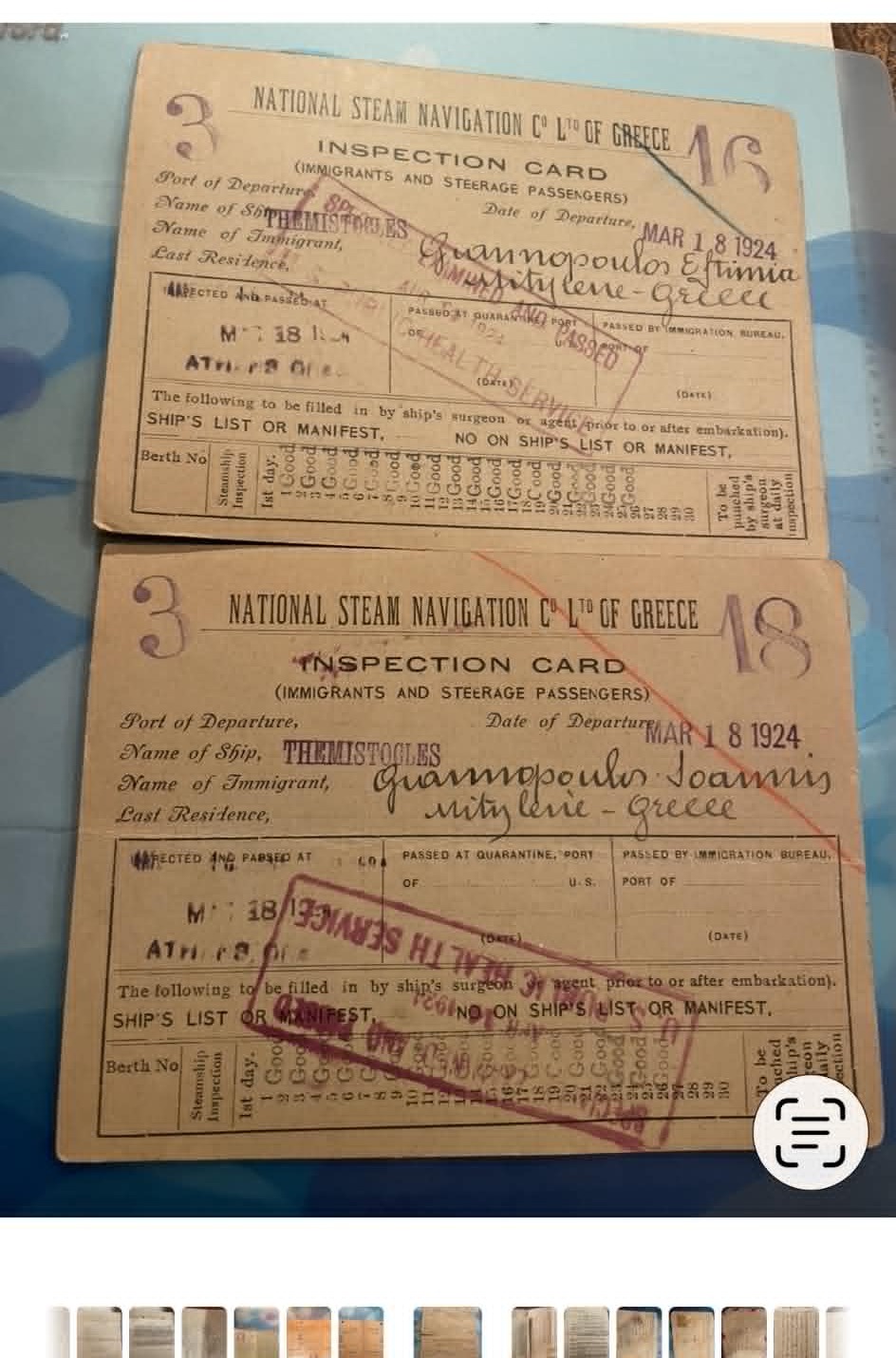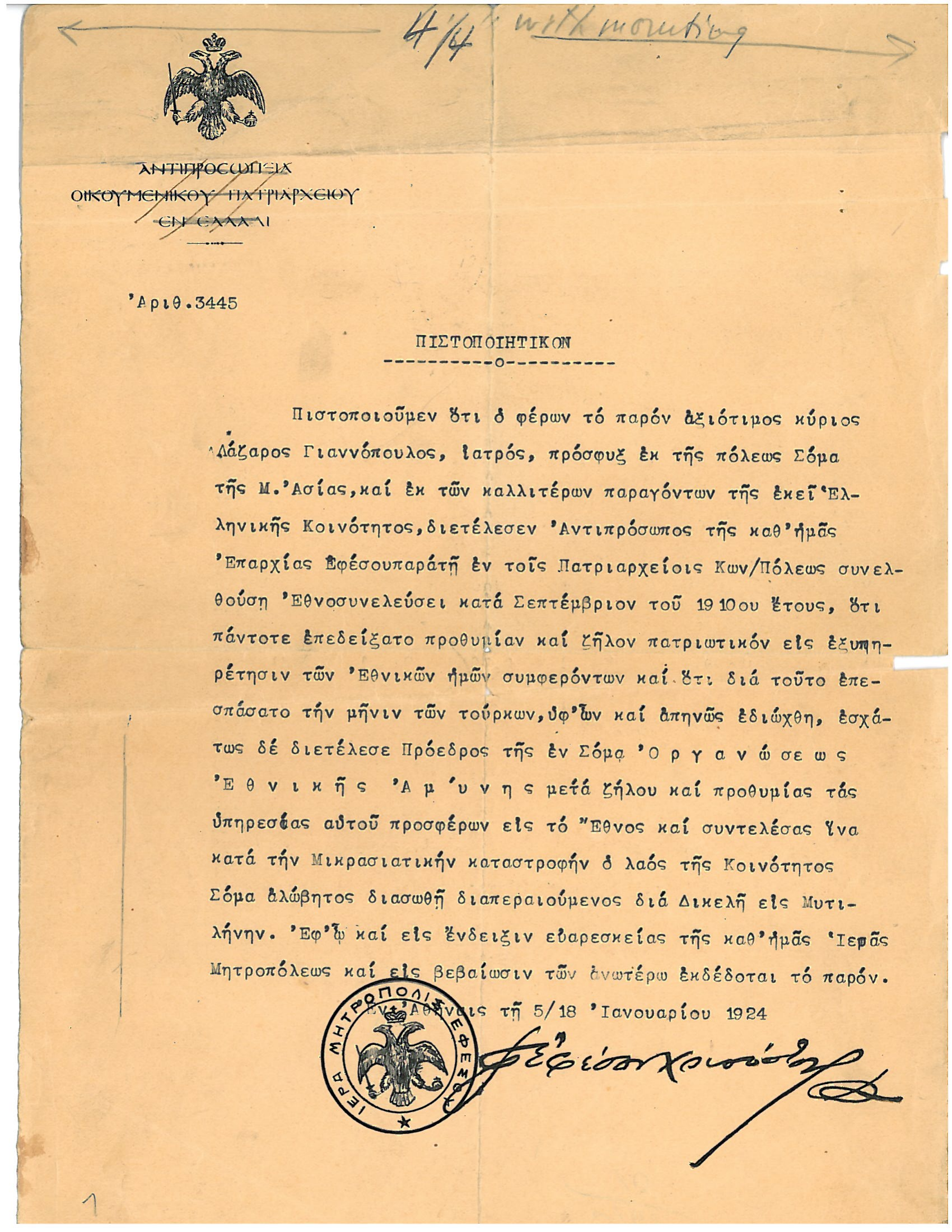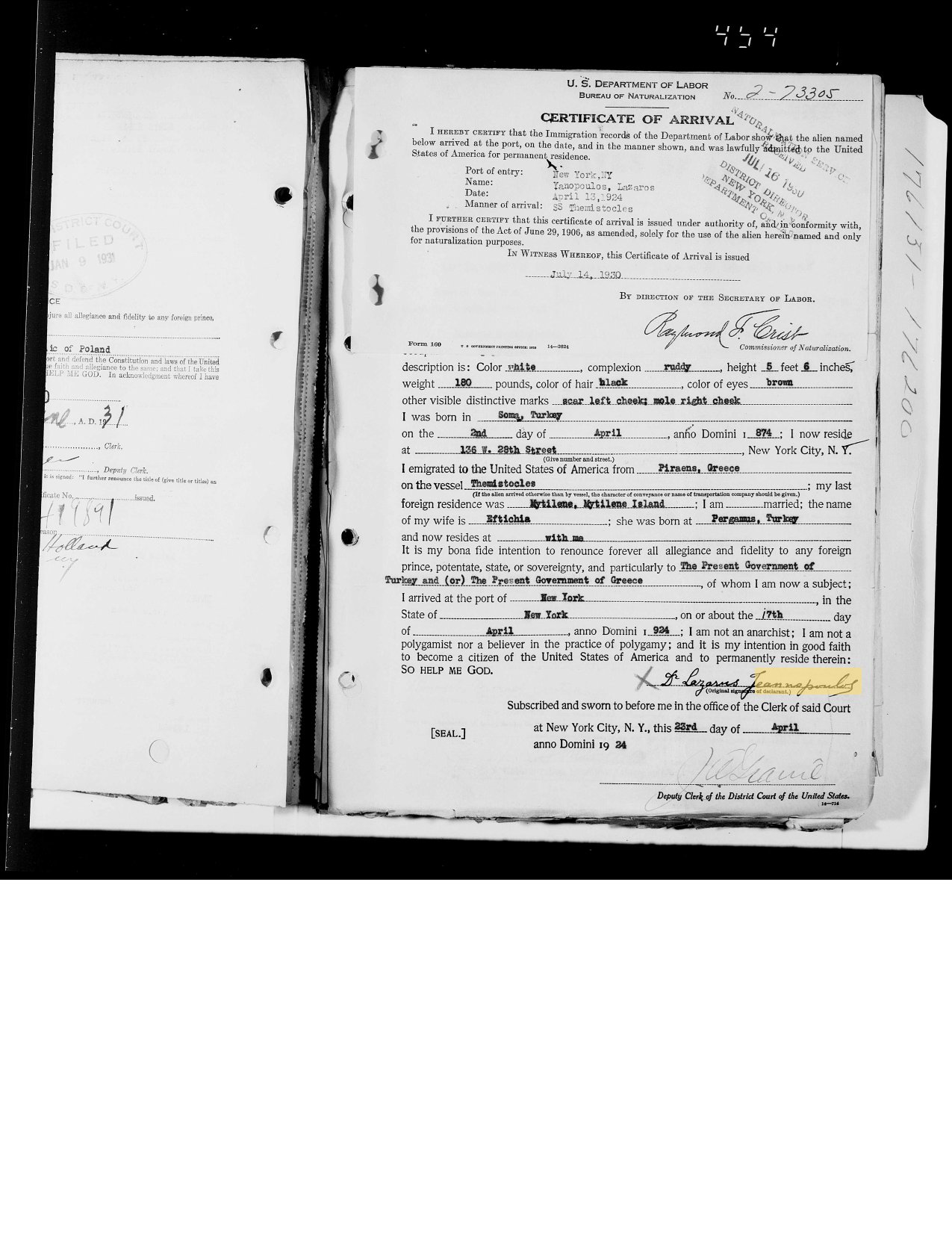
Ten days off the SS Themistocles, Lazaros filed his Declaration of Intention — the sworn first step of US naturalization in the 1920s, a formal statement that the applicant intended to become a citizen, filed years before the longer Petition for Citizenship that would come later. He filed it in New York on April 23, 1924; the Petition was filed May 1930 and signed January 9, 1931; final naturalization came under Certificate #3421529 in 1931 — roughly seven years total. (An earlier draft of this site had his naturalization at September 10, 1928; that was incorrect, surfaced when the actual Petition document was retrieved from Ancestry in May 2026.)
The document is the deepest contemporary anchor we have for Lazaros’s first weeks in America — birth date and place, ship of arrival, address at filing, occupation, and physical description, all in his own hand, ten days after the journey.
Key facts on the document
| Field | Value |
|---|---|
| Filing date | April 23, 1924 |
| Filed at | District Court of the United States, Southern District of New York |
| Form / No. | Department of Labor Naturalization Service Form 2202; cert no. 2-73305 |
| Age | 50 |
| Occupation | Physician |
| Personal description | White, ruddy complexion, 5’6”, 180 lbs, black hair, brown eyes, scar on left cheek + mole on right cheek |
| Born | Soma, Turkey, April 2, 1874 |
| Then residing | 138 W. 28th Street, New York City (Chelsea / Garment District) |
| Emigrated from | Piraeus, Greece, on the SS Themistocles |
| Last foreign residence | Mytilene, Mitylene Island |
| Wife | Eftichia, born at Pergamos, Turkey, residing with him |
| Renouncing allegiance to | The Present Government of Turkey and the Present Government of Greece |
| Date of NY arrival | April 13, 1924 |
| Signature | Λ. Λαζαρός Γιαννόπουλος (his Greek hand) |
The renunciation language is striking: Lazaros explicitly disclaims allegiance to both Turkey and Greece — a recognition that as a Greek-speaking subject of an Ottoman successor state, the legal definition of his nationality was something both countries could claim and both he had to formally repudiate before American citizenship could attach.