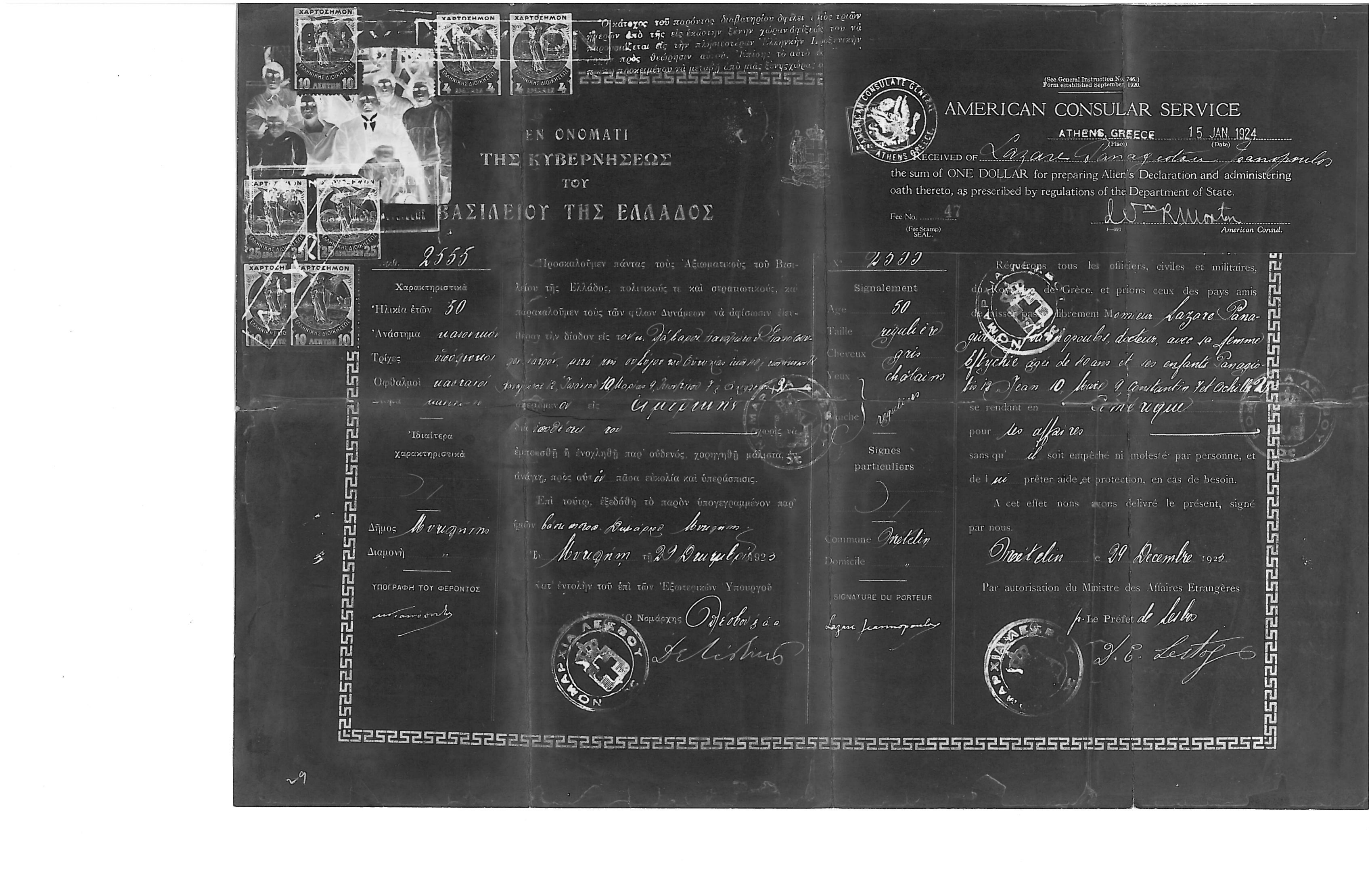
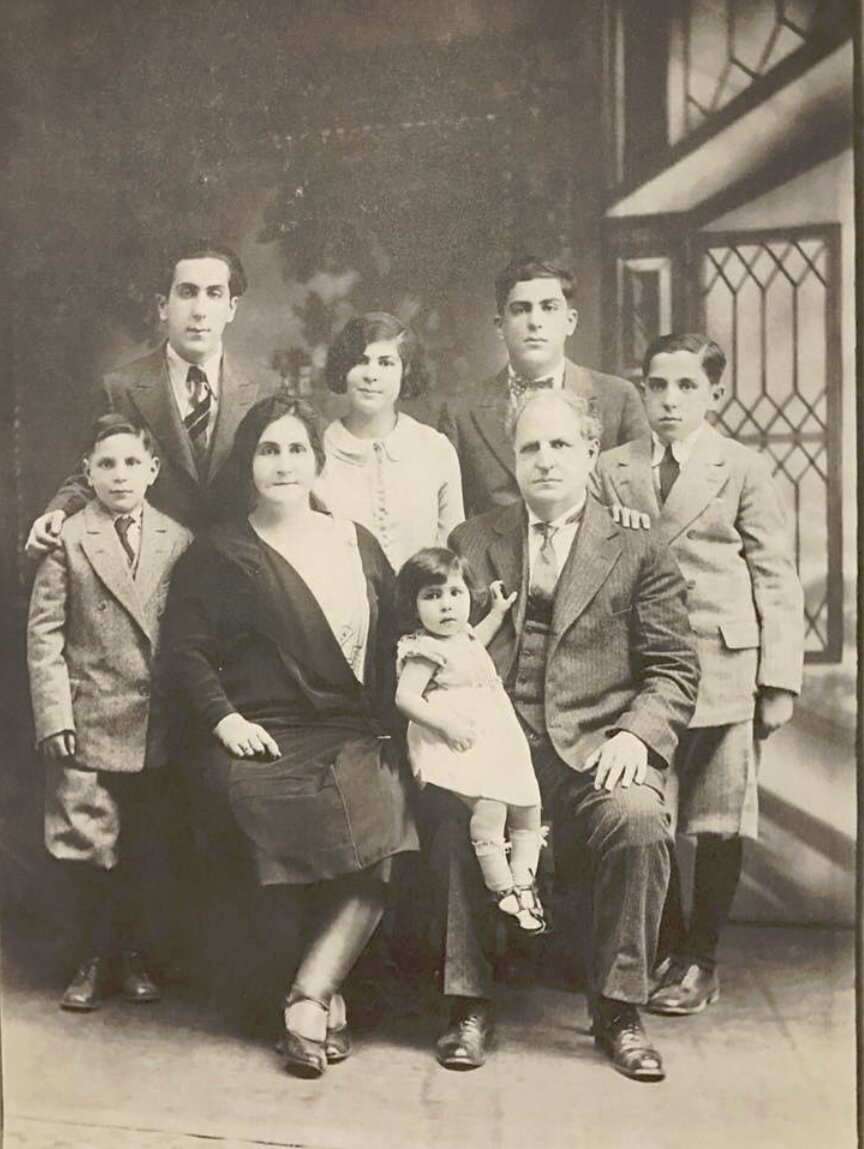
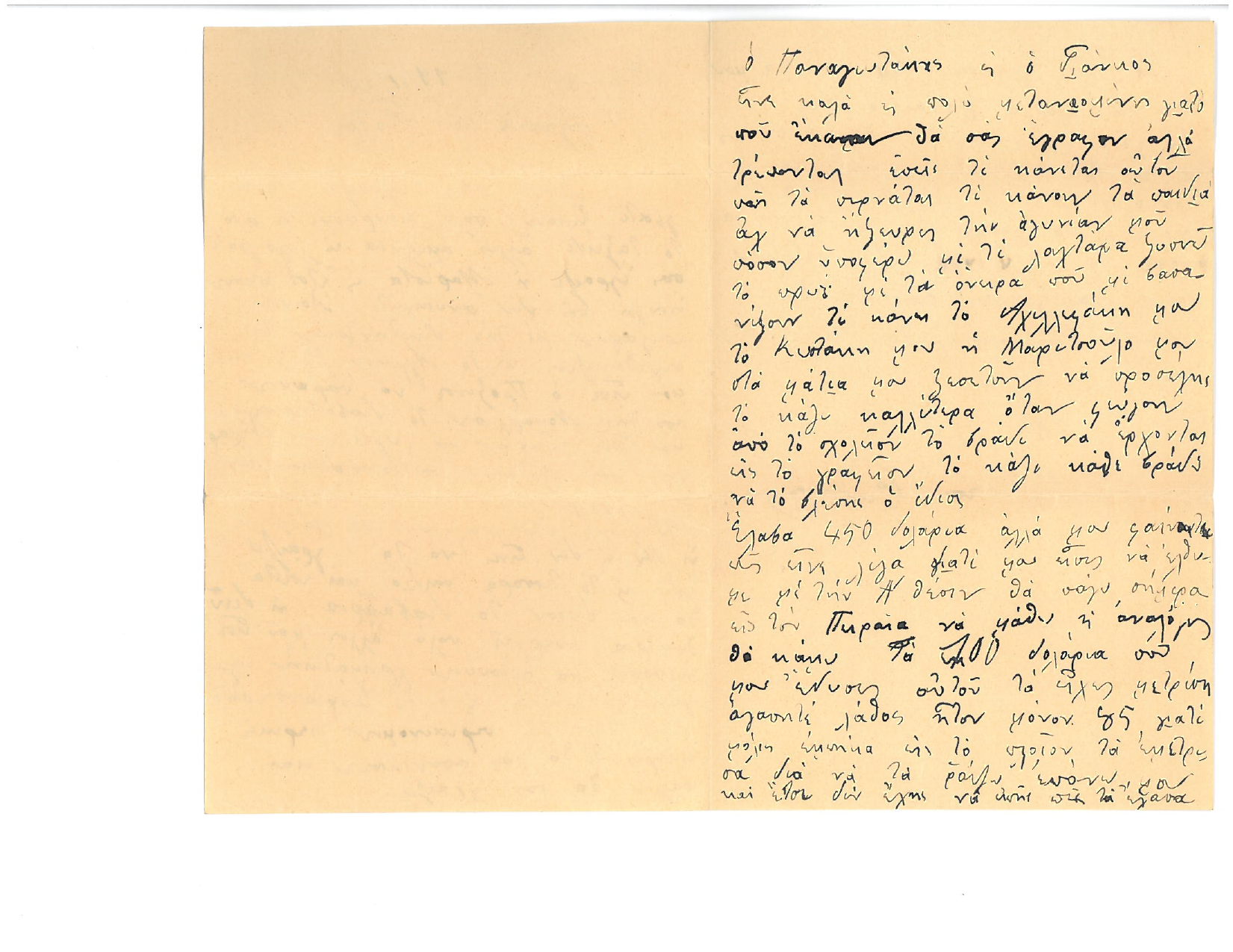
She was born to Lazaros and Eftyhia around 1914, somewhere in western Anatolia — the Asian landmass of modern-day Turkey — in Soma or Smyrna; the exact town is one of those things the catastrophe took with it. To her brothers and her parents she was always Maritsa (Μαρίτσα), the Greek diminutive of Maria. To US immigration in 1938 she was Mary. Both names were the same person.
She was about eight years old when the Asia Minor catastrophe — the violent uprooting of the Greek communities of Anatolia — came in 1922. The family record’s most vivid refugee-camp anecdote belongs to her — a moment of childhood entitlement and household ingenuity from the Mytilene camp, where she lived for two years with her parents, brothers, and a household servant girl who had escaped Asia Minor with the family:
“Imagine she was a very rich little girl. Maybe one of the richest in their town and certainly one of the most respected families. Then all of a sudden you are homeless, have nothing and are in a refugee camp. She had no shoes.
“The Red Cross brought her a donated used pair. Not perfect. One had a bow and one had the bow missing. She threw a tantrum, wouldn’t put them on. The young girl that lived with them and fled with them was smart enough to rip off the other bow and that worked.” — Aline Pepe (her niece, John Lazare’s daughter), 2026-05-22
Aline tells the story not as a criticism but as an explanation. Maritsa grew up to be, in Aline’s words, “all 5th Ave — all about appearances” — and the shoes story is the family’s compassionate answer to why. A child who lost her rank overnight became an adult preoccupied with maintaining the outward markers of one.
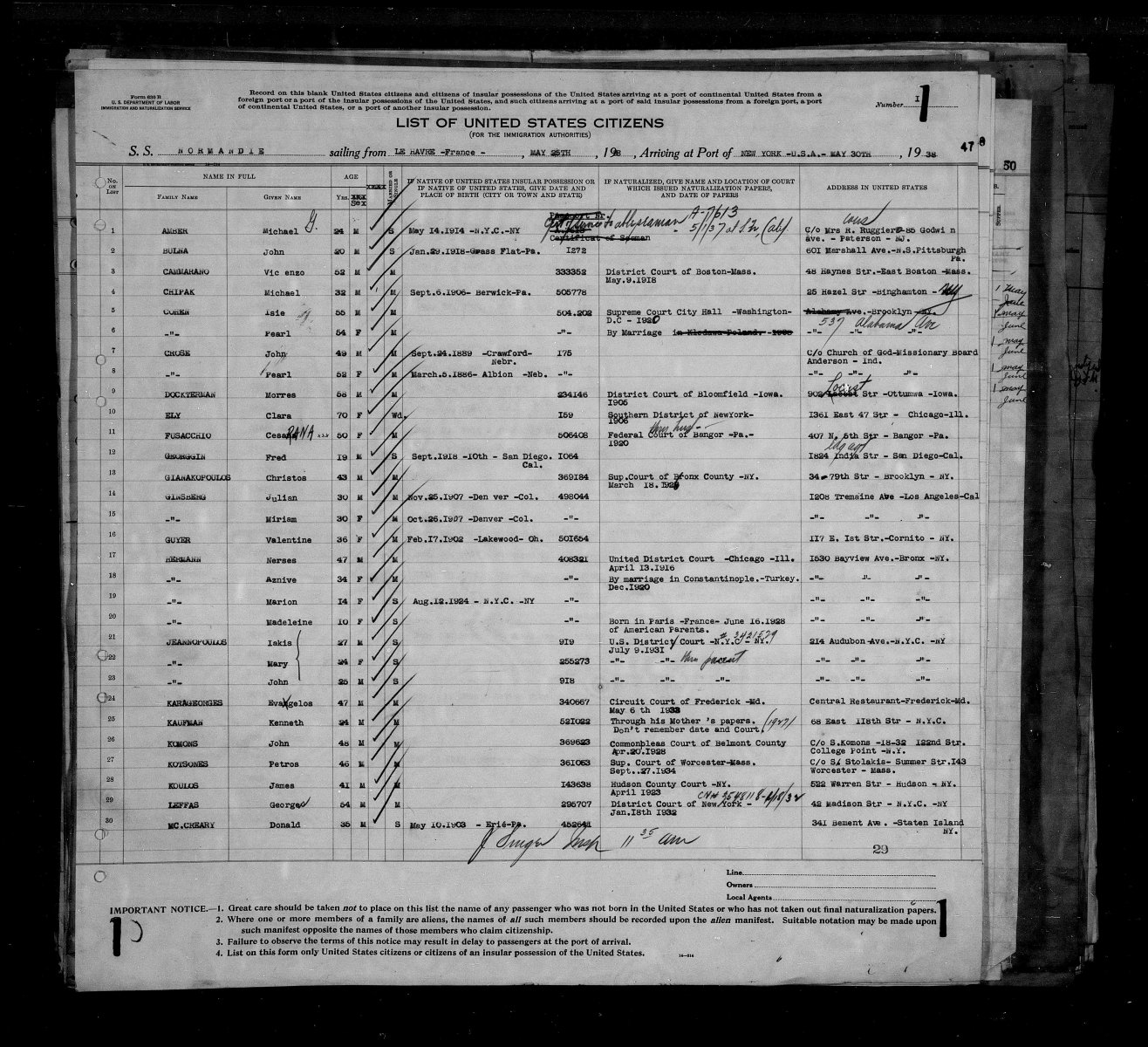
She first came to New York as a ten-year-old in 1924 with her mother Eftyhia and siblings on the SS Themistocles. Her 1938 SS Normandie arrival at age twenty-four — on the “List of United States Citizens” page of the manifest, already an American citizen by derivation through her father Lazaros’s 1931 NYC naturalization — was a return trip from a European visit, not her original immigration. The exact European stop is open; her brothers Takis and John Lazare were both in Paris through the 1930s for medical school, and a family-reunion visit to them is the natural reading. Five years later, on 20 December 1943, in her late twenties, she married Dr. Spyridon H. Kritzalis (Σπυρίδων Κριτσάλης / “Spyros”) in Manhattan — the wedding date and place confirmed via the New York City marriage index (Ancestry, 2026-05-22). The family knew the couple as Dr. and Mrs. Spyridon Kritzalis, and they lived in Manhattan their adult lives. Her surname appears in different documents as Kritsalis (Peter’s spelling) or Kritzalis (Aline’s spelling) — the same Greek surname, two Latin transliterations of Κριτσάλης. Date and place of her death are still open.